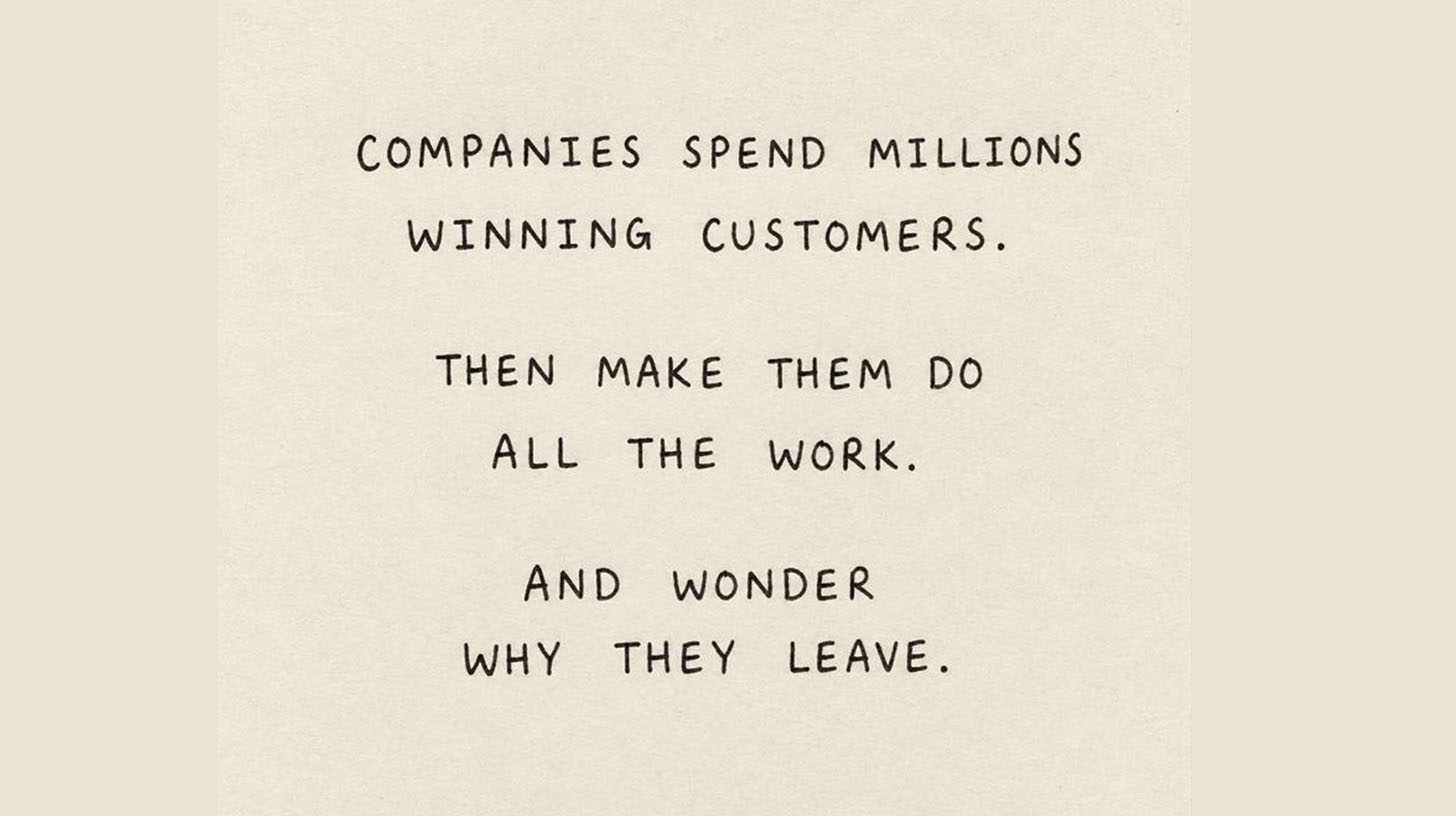
COMPANIES SPEND MILLIONS WINNING CUSTOMERS—THEN MAKE THEM DO ALL THE WORK
COMPANIES SPEND MILLIONS WINNING CUSTOMERS—THEN MAKE THEM DO ALL THE WORK
You can get a copy here: www.loweffort.com/claimser
We went to see Spider-Man last night.
Highly recommended, by the way.
Unlike The Odyssey. I didn’t get it.
We went to one of Edinburgh’s most opulent cinemas. Tickets were £25 each.
Inside were beautiful electric reclining sofas and a QR code for ordering food.
A slushie and popcorn cost £14.
We Scots are not tight btw - this was just damn expensive.
I knew it wasn’t good value. But then I reclined the sofa and all the pain disappeared.
Until I tried to order coffee.
No coffee. No tea. No hot chocolate.
I stopped a passing attendant. The adverts were still playing, so as you know, talking is permitted.
“We only deliver food through the QR code,” he explained. “For hot drinks, you have to go upstairs.”
My youngest immediately spotted the absurdity:
“Isn’t that silly, Dad? They spent millions making this cinema so we’d come here. Then, once they got us comfortable, they made us do all the work to get a coffee.”
Daniel Rodgers can you fix this? 😂
But she was right.
And kids know. Research in my house alone suggests they’ll do everything to live exclusively from bed if their parents will serve them hand and foot.
Note to readers: I know what you’re thinking. “Get off your bum, Stuart, and fetch the coffee.” But two things. First, that QR code had been sold to me like a genie in a bottle: three rubs and anything I desired would appear. Second—and I cannot stress this enough—I had reclined. There was no going back.
Insurers do something remarkably similar to the cinema.
Then the claim.
Suddenly, the comfortable sofa with the fancy buttons disappears.
The customer must chase updates, repeat information, navigate departments and coordinate the insurer’s suppliers.
Nearly half of claimants surveyed by Which? reported experiencing a problem with their claim.
Yet switching is falling?
Only 33% of motor and 36% of home customers changed insurers during the first half of 2025.
But don’t confuse staying with loyalty.
That isn’t loyalty.
It’s resignation. My aunt (you got to love her) cliams (no pun intoned) it’s hostage taking.
Spend money winning them.
Make them work when they need you.
Then spend more money winning them again.
On Tuesday, I’ll publish the full argument connecting low customer effort to loyalty—and loyalty to profit.
If you’re not subscribed to my LinkedIn newsletter, The Low Effort Advantage, now is the time.
Subscribe here:
https://www.linkedin.com/newsletters/the-low-effort-advantage-7115709448672657409/
Supporting data comes from Consumer Intelligence’s End of Churn research.
New book is on Amazon and is a best seller. https://amzn.eu/d/0d3beYkk
Or You can get at free copy here: www.loweffort.com/claimser
If the problem is urgent, our two-day Claims Workshop will help you identify the core constraint in your operation and build a practical plan to resolve it within 90 days:
Book a call: https://nobacklog.co.uk/claims
#loweffort #customerexperience #customerloyalty