THE 5% THAT COULD ALMOST DOUBLE YOUR PROFITS
THE 5% THAT COULD ALMOST DOUBLE YOUR PROFITS
Bain & Company found that increasing customer retention by just 5% can increase profits by between 25% and 95%.
The mathematics sounds ridiculous.
It isn’t.
Many years ago, I worked with a telecoms giant that wanted to make more money.
We began by listening to customer calls.
One customer said:
“I am ******* sick of your service. I’ve tried to leave, but you make it impossible. When I finally get out, I am never coming back.”
This was deliberate.
The company had made leaving difficult.
Leaders called it retention.
But making customers stay is not the same as making them want to stay.
One is forced retention.
The other is earned loyalty.
And that distinction explains the mysterious 5%.
New customers are expensive. You must advertise, persuade and onboard them before recovering the acquisition cost.
Existing customers have already crossed that bridge.
Each additional year protects future revenue without repeating the original expense. Some buy more. Some recommend you. And the value accumulates.
But here is where companies go wrong.
I remember listening to calls in a household-name pensions provider.
One customer had paid into his pension for 40 years.
When he retired, his first payment was late.
He was told pensions were complicated and he needed to be patient.
“How patient should I be?” he asked.
“After all, you’ve known about this for 40 years.”
Then he added:
“Be assured, I’ll be letting the trustees know.”
And he was not unusual.
CEB research published in Harvard Business Review found that 81% of customers experiencing high-effort service intended to speak negatively about the company.
High effort does not remain inside customer service.
Customers carry the story outside.
There is another way.
T-Mobile’s leaders became obsessed with finding and removing points of customer friction.
They introduced dedicated Teams of Experts, reducing handoffs and giving customers direct access to a familiar team.
T-Mobile reports that customer churn fell by 39%, while calls per account fell by 37%.
Lower effort strengthened loyalty.
Retention improved.
Costs fell.
Deming understood the connection:
Listen to the complaints.
Study the repeat calls.
Find the work customers should never have been asked to perform.
All the clues to the missing 5% are already there.
That is the commercial logic:
Low Effort → Loyalty → Profit.
Remember:
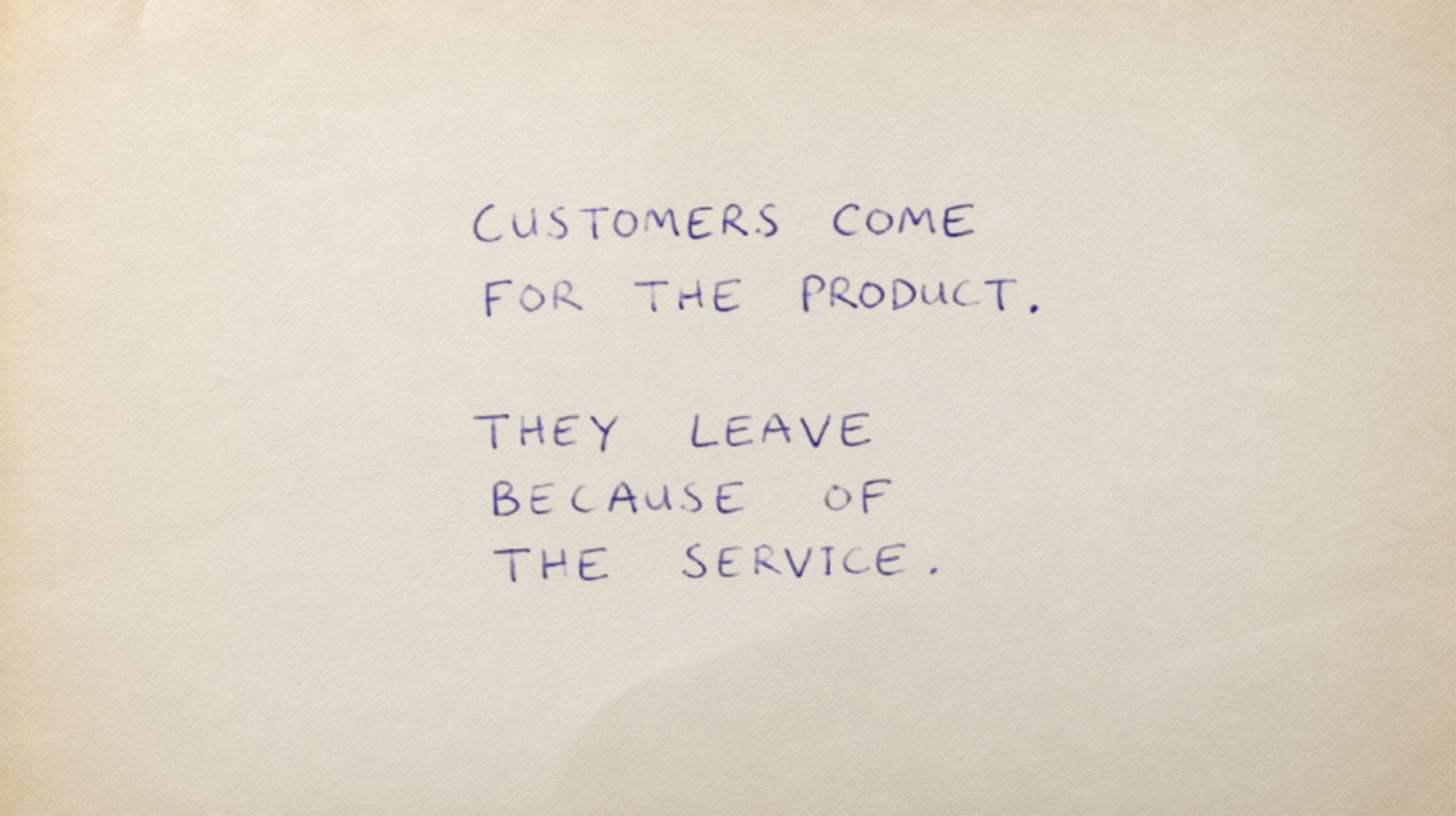
Customers come for the product.
They leave because of the service.
Subscribe to The Low Effort Advantage for Tuesday’s full article: Why Loyalty Is Too Important to Be Bought.
https://www.linkedin.com/newsletters/the-low-effort-advantage-7115709448672657409/
New book is on Amazon and is a best seller. https://amzn.eu/d/0d3beYkk
Or You can get a free copy here:
If the problem is urgent, our two-day Claims Workshop will help you identify the core constraint in your operation and build a practical plan to resolve it within 90 days:
Book a call: https://nobacklog.co.uk/claims